
Mining Calculator Bitmain Antminer T19 88Th
Calculation Results ($)
| Day | Week | Month | |
|---|---|---|---|
| Revenue (after pool fee) | ... | ... | ... |
| Electricity Cost | ... | ... | ... |
| Net Income | ... | ... | ... |
Payback period: ...
Most profitable coin found: Peercoin (PPC) on algorithm SHA-256
Note: The calculation is an estimate and does not account for changes in network difficulty, coin price, or other potential expenses.
Main Specifications
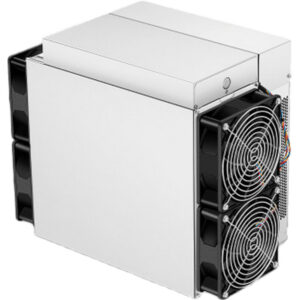
The Antminer T19 is a classic “workhorse” ASIC from Bitmain, built without regard for elegance and focused purely on raw power. Released in 2021, it represents a reliable soldier from the previous generation of miners. Its 88 TH/s is not a mind-blowing figure today, but coupled with Bitmain’s reputation, it signifies predictable and stable operation. This is not an experimental flagship, but a battle-tested tool designed to simply hash 24/7, requiring minimal intervention.
The main compromise and Achilles’ heel of the T19 is its energy efficiency. The figure of 38 W/Th (3344 W for 88 Th) is a watershed that clearly separates it from modern, more technologically advanced machines. In an era where every watt counts, the T19 looks like a power-hungry veteran. Its economic viability directly and mercilessly depends on the cost of electricity. If you have access to cheap or virtually free electricity, it can still generate profit. Otherwise, its appetite will consume all income.
Structurally, it’s a typical industrial unit. Four fans operating at their limit create a noise of 75 dB – a roar absolutely unacceptable for placement outside of a specially prepared room. Forget balconies or garages; the T19 requires its own space with good ventilation and soundproofing. A weight of 14.2 kg and the standard “brick” form factor emphasize its utilitarian purpose. No Wi-Fi, only reliable Ethernet – this machine is built for rack operation, not home experiments.
In summary, the Antminer T19 (88Th) today is a niche product. It is purchased not for cutting-edge technology, but for its low price on the secondary market and time-tested reliability. It is an ideal choice for scaling existing farms in regions with low electricity costs. It is for those who think in terms of “dollar per terahash” when buying, rather than “cents per kilowatt” when operating. For novices or miners in Europe, it will likely be a financial trap rather than a source of income.


Leave a review