
Mining Calculator Bitmain Antminer S19j Pro 100Th
Calculation Results ($)
| Day | Week | Month | |
|---|---|---|---|
| Revenue (after pool fee) | ... | ... | ... |
| Electricity Cost | ... | ... | ... |
| Net Income | ... | ... | ... |
Payback period: ...
Most profitable coin found: Peercoin (PPC) on algorithm SHA-256
Note: The calculation is an estimate and does not account for changes in network difficulty, coin price, or other potential expenses.
Main Specifications
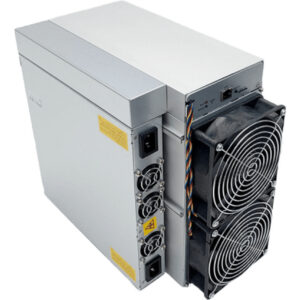
The Antminer S19j Pro with 100 TH/s is not just an ASIC; it’s a symbol of an entire era in mining, a true “people’s” flagship of 2021. This machine made a hashrate of 100 terahashes accessible to a wide range of industrial miners and for a long time became the gold standard and a benchmark for the entire industry. Its reliability and predictability turned it into an absolute workhorse, on which hundreds of megawatts of capacity were built worldwide.
But time is relentless, and today the entire essence of this device lies in its energy efficiency. With a power consumption of 3050 W, we get a figure of 30.5 J/Th. This number is its Achilles’ heel in 2024. Against the backdrop of modern machines that have already broken the 20 J/Th barrier, the S19j Pro looks extremely “power-hungry.” This difference in efficiency is not just numbers; it’s a direct difference in operating profit, which determines whether you will remain profitable after the halving and during price drops.
However, its ironclad reputation and absolute predictability speak in its favor. It’s a time-tested chassis, a standard four-fan system creating the familiar 75 dB hum, and an architecture familiar to all engineers. It doesn’t present surprises, and its maintainability has been studied inside and out. It’s a reliable and durable soldier that won’t let you down.
The verdict is simple: the Antminer S19j Pro is the king of the secondary market and an ideal choice for miners with access to super-cheap or virtually free electricity. Building a new farm from scratch with it today is economically unfeasible. But as a budget way to increase capacity or as a first industrial ASIC for refining processes, it is still a viable and relevant option, but only if you clearly understand its economic limitations.


Leave a review